The Muse Journal
Thoughts on cosmetic dentistry, facial aesthetics, and the art of natural enhancement from Dr. Darian Anderson and Sarah Garces, NP-C.
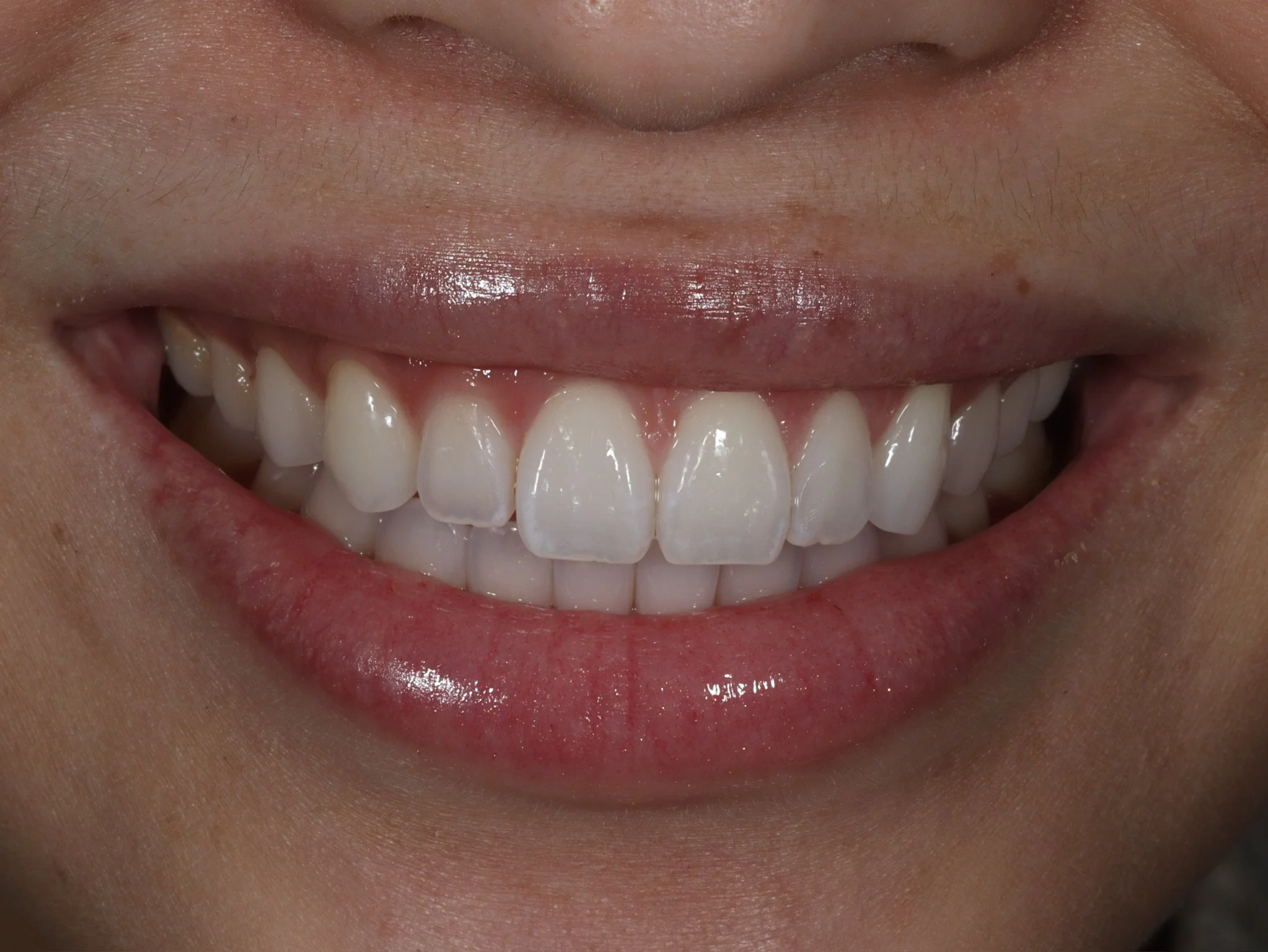
Will My Veneers Look Fake? An Honest Answer from a Cosmetic Dentist
This is the question I hear at almost every veneer consultation.
It's usually phrased a few different ways. "I want veneers, but I don't want them to look done." "I've seen people whose veneers look so fake, I don't want that." "Can you make them look natural? Like, REALLY natural?"
The honest answer is yes. Veneers can look completely natural and undetectable when they're designed and executed well. They can also look obvious and overdone when shortcuts are taken.
The difference isn't about the technology. It's about the philosophy of the dentist designing them.
Let me explain what actually makes veneers look natural versus fake, and what to look for when you're trying to choose a cosmetic dentist who will give you the result you actually want.
Why so many veneer cases look fake
If you've ever seen someone whose veneers look obvious, you can usually point to one of three issues:
1. They're too white.
This is the single most common cause of fake-looking veneers. Patients often request the brightest possible shade because they associate "white" with "beautiful." But teeth that are too white for your skin tone, eye color, and facial features stand out instead of blending in. A truly natural shade is bright but warm, with subtle variation in translucency that mimics natural enamel.
2. They're too uniform.
Real teeth aren't perfectly identical. Each tooth has slight variations in shape, length, and translucency. When veneers are made too symmetrical and too matched, they read as artificial because the human eye unconsciously notices the lack of natural variation.
3. They're too long or too prominent.
Veneers should be designed in proportion to your face, your lip line, your gum line, and the visible space when you smile. When veneers are made too long or too forward-facing for someone's facial proportions, they create that "horse teeth" or "Chiclet teeth" look that's instantly recognizable as cosmetic work.
In every case, the issue isn't the porcelain. It's the design choices.
What makes veneers look natural
Natural-looking veneers come from getting four things right.
1. Conservative tooth preparation
There's a subset of dentistry that aggressively reduces the natural tooth structure to make placing veneers easier. The problem is that over-prepped teeth produce thick, opaque veneers that look bulky and obvious.
At Muse, we follow a conservative prep philosophy. We remove the minimum amount of natural tooth structure necessary, often less than 0.5mm. This allows us to use thinner, more translucent veneers that mimic the optical properties of real enamel. Your teeth still look like teeth, not like veneers placed on top of teeth.
2. Facially integrated smile design
Before any prep happens, we use a process called facially integrated smile design to map your veneers to your unique facial proportions. This includes:
The width of your face
The shape of your lips when you smile
The position of your gum line
Your chin and jawline proportions
The amount of tooth visible when you speak vs. smile
Veneers designed to complement your face (rather than to a generic template) look like they belong to you. That's the goal.
3. Master ceramist craftsmanship
The lab matters as much as the dentist. A master ceramist hand-layers porcelain to create natural variation in shade, translucency, and surface texture across each veneer. Mass-produced veneers (often from overseas labs that some practices use to keep costs down) lack this artistry, which is why they tend to read as uniform and artificial.
We work with a domestic master ceramist who handcrafts every veneer for our cases. The cost is higher than commodity labs. The result is incomparable.
4. The right shade for YOUR face
This is where I push back on patients more than anywhere else. When someone asks for the brightest white possible, my job is to honestly explain why that shade likely won't look natural on their face.
The most natural-looking shade is usually 1-2 shades brighter than your current color, not 5 shades brighter. We use shade guides and digital previews to help you visualize what different shades will actually look like on your face before any porcelain is made.
What to ask before you commit to a veneer case
If you're consulting with multiple dentists, here are the questions that will tell you who's likely to deliver natural results:
"How much tooth structure will you remove?" Anything more than 0.5mm should make you ask follow-up questions. Aggressive prep produces less natural results.
"Who is your lab partner and where are the veneers made?" A reputable cosmetic dentist will know their lab by name and have a relationship with the ceramist. Vague answers are a red flag.
"Will I see a digital preview of my smile design before any work begins?" Modern cosmetic dentistry uses Virtual Smile Design or similar tools to preview the result. If a dentist doesn't offer this, they're working without a roadmap.
"What shade do you typically recommend, and why?" A dentist who insists on the brightest possible shade or who recommends a shade without considering your features is prioritizing what's easy over what's right.
"Can I see before-and-afters of patients with similar features to mine?" Look for results where the patient looks like themselves with a beautifully refined smile, not like a different person.
The "less is more" approach to natural veneers
The patients who end up most happy with their veneer results are usually the ones who started by saying "I want them to look like ME, just better."
That's exactly the right framing.
The best veneer cases I've ever done are the ones where someone close to the patient says "did you do something? Your smile looks great, but I can't tell what's different." That's the goal. Refined, but not obvious. Brighter, but not bleached. Symmetrical, but not identical.
Less is more. Natural is harder than dramatic, but it's worth it.
What natural veneers look like at Muse
Every veneer case at Muse follows this approach. We design conservatively, we work with a master ceramist, we shade based on your face, and we use Virtual Smile Design to preview your result before we start.
Patients often ask if we have a "house style." We don't, because the whole point is that your smile should look like YOU, not like a Muse template. What we do have is a philosophy: facially integrated, conservative, intentional, and built around natural beauty.
The easiest first step
If you've been thinking about veneers but worried about looking fake, the best first step is our free Virtual Smile Consultation. You send a few photos, and I personally review them and give you honest feedback on what would actually look natural on your face.
You can start at themuseaesthetics.com/virtualsmileconsultation, or book an in-person consultation here.
The fear of fake-looking veneers is one of the biggest reasons people hesitate to start treatment. It's a completely valid fear. But it doesn't have to be your reality. Done well, veneers can give you a smile that you'll forget you didn't always have.
— Dr. Darian Anderson, DDS
Muse Aesthetics & Dentistry, Del Mar
Disclaimer:Results shown are representative of what can be achieved through cosmetic dentistry services and individual results may vary based on personal factors, existing dental conditions, and compliance with post-treatment care instructions. This content is for informational purposes only and does not constitute medical advice. Please consult with a licensed dental professional to discuss your specific situation and treatment options. All cosmetic and restorative dental procedures carry certain risks and benefits that will be discussed during your consultation.
First-Time Injectables: Everything You Need to Know Before Your First Appointment
If you've been thinking about Botox or filler for the first time, you're not alone!! Some of my favorite patients are the ones who've been thinking about it for months (or YEARS) before finally booking.
I get it. Trying anything injectable for the first time feels like a big step. There's so much information online, half of it is conflicting, and it's hard to know what's actually true vs what's just marketing.
So I wanted to write the guide I wish every first-time patient had before their first appointment. Honest, clear, no fluff 💗
start with WHY
Before I talk about treatments or what to expect, the most important thing for any first-time patient to think about is: what's actually bothering you?
Not what you think you "should" treat. Not what an Instagram filter shows. Not what your friend got. What's bothering YOU when you look in the mirror?
The answer might be:
"My forehead lines are starting to show even when I'm not making expressions"
"My lips have always felt thin and I want a little more definition"
"I look tired all the time even when I'm rested"
"My face has changed since I had a baby and I don't feel like myself anymore"
"I just want to look refreshed, but I don't know what I need"
ALL of those are valid reasons to come in. There's no "right" reason and no "too small" reason. The point is to know your why so we can build a plan that actually addresses it.
what's the difference between Botox and filler?
This is one of the most common first-time questions, so let's get it out of the way.
Botox (and similar neurotoxins like Dysport) temporarily relax the muscles that cause expression lines. Think forehead lines, frown lines between your brows, crow's feet around your eyes. Botox is preventative AND corrective. It softens existing lines and prevents new ones from deepening. Results show up gradually over 5-7 days and last 3-4 months.
Filler adds volume back to areas that have lost it (or never had as much as you wanted). Think cheeks, lips, chin, under-eyes, jawline. Filler is made of hyaluronic acid (a substance your body already produces naturally), and it can be dissolved if you don't love the results. Results are immediate and last 9-18 months depending on the area.
A LOT of first-time patients think they need one when they actually need the other (or both!). That's exactly what your consultation is for.
what to expect at your first consultation
Your first visit at Muse will look like this:
1. We talk first. Before any decisions are made, we sit down and I ask what's been on your mind, what you've tried before, what you're hoping for, and what you're nervous about. There are no wrong answers!!
2. I do a full facial assessment. I look at your face from multiple angles, study your proportions, and assess where treatment would actually create harmony. Sometimes the answer is the area you came in for. Sometimes it's somewhere you didn't expect.
3. We build a real plan together. I walk you through exactly what I'd recommend, why, what it costs, and what the realistic timeline looks like. You'll know the full picture before any product touches your skin.
4. You decide what feels right. You might want to do everything we discussed at that visit. You might want to start with one area and see how it feels. You might want to think about it and come back. ALL of those are completely fine 💫
There is zero pressure to commit during the consultation. I'd genuinely rather you leave thinking about it than rush into a decision you're not ready for.
what does it actually cost?
Honestly, this is hard to answer in a blog post because injectable pricing depends on so many factors: which products we use, how much you actually need (which is usually less than you think!), whether you're doing one area or facial balancing across multiple areas, and your overall treatment plan.
What I can tell you generally:
Wrinkle Relaxer is usually priced per unit, and most first-time patients only need a small number of units to address their main concerns.
Filler at Muse is priced per area, not per syringe like most med spas. This means you're paying for the result we're building together (cheeks, lips, chin, jawline, etc.) rather than guessing how many syringes you "need." Most first-time patients are great candidates for starting with a single area to see how it feels (you do NOT need to do everything at once, no matter what TikTok says).
Facial balancing sessions are priced based on what's included in your specific plan.
Pricing in the Del Mar and San Diego market for boutique aesthetic practices like ours is in line with what you'd expect for premium injectable work performed by an experienced provider using high-quality products and ultrasound guidance. Significantly cheaper pricing should make you ask questions about who's injecting you and what product they're using.
At Muse, we'll always give you a real, customized quote at your consultation before any product touches your skin. Zero surprises.
what to do (and not do) before your appointment
A few simple things to make your appointment go more smoothly:
Do:
Eat a real meal beforehand (low blood sugar makes you more likely to feel lightheaded)
Stay hydrated the day before and day of
Come with clean skin (no makeup is ideal but not required)
Bring a list of any medications and supplements you take
Avoid for 24-48 hours before:
Alcohol (increases bruising)
Aspirin, ibuprofen, fish oil (blood thinners that increase bruising)
Strenuous workouts the morning of (raises blood pressure)
Aggressive facials, peels, or waxing on areas being treated
Some bruising can still happen no matter what you do (especially with filler near the lips and under eyes). It's normal and almost always resolves within a few days.
what does it actually feel like?
This is the question first-time patients are usually most nervous about, so let's be real about it.
Botox uses an extremely fine needle and feels like a quick pinch in each spot. Most people say it's much less than they expected. We can ice the area beforehand if you're nervous. The whole appointment usually takes 10-15 minutes.
Filler can feel slightly more intense because we're using more product, but every filler I use contains lidocaine (a numbing agent) so it gets more comfortable as we go. Lips are the most sensitive area, but we use topical numbing cream beforehand to take the edge off. Most patients describe it as "weird pressure" more than pain.
The whole experience is way more chill than most people imagine going in 💗
the recovery (or lack of it)
For most injectable treatments, there's basically no real downtime. You can drive home, go back to work, see friends. The most common side effects are:
Mild swelling for 1-3 days, especially with filler
Possible bruising at injection sites (usually small)
Temporary tenderness when touched
A "lumpy" feeling with filler in the first few days as it settles
You might want to plan a quiet evening after lip filler if you want to avoid being seen with extra swelling. But for forehead Botox or cheek filler? You can absolutely go straight back to your day.
I always recommend booking your first appointment at least 2 weeks before any major event (wedding, big work meeting, photo shoot) so everything has time to settle perfectly.
red flags when choosing your first injector
Since this is your first time, choosing the right person matters SO much. Here are red flags that should make you pause:
They push you to get more than you came in for. A good injector recommends what's appropriate. A bad one upsells.
They don't ask about your medical history. Skipping this isn't just careless, it's unsafe.
They quote pricing dramatically below market. Sometimes that's a great deal. More often it means they're using counterfeit product or cutting corners on safety.
They can't or won't show you their work. Every legit injector has before-and-afters of their own patients.
They make you feel rushed. Your first appointment should never feel like a transaction.
They don't have a medical background. Some states allow non-medical "injectors" with minimal training. Always make sure you're being treated by an MD, NP, PA, or RN with proper training and supervision.
what makes Muse different for first-time patients
I've been doing this for a long time and I genuinely love working with first-time patients. There's something so special about being someone's introduction to injectables. It's a moment of trust I don't take lightly 💗
A few things first-timers usually appreciate at Muse:
No pressure, ever. Consultations are complimentary. You can walk out without booking. I genuinely won't push you.
Ultrasound-guided filler for added safety, especially valuable for first-timers
Per-area filler pricing instead of per-syringe, so you're paying for the result we're building, not the volume of product
Conservative philosophy. I will almost always recommend less product than you might expect. You can always add more later. You can't easily take it back.
A team that gets it. We'll walk you through what to expect, prep your skin, and make sure you're comfortable from the moment you arrive.
what to do next
If you're ready to talk through your options or just curious whether injectables are right for you, the easiest first step is booking a complimentary consultation. We'll talk through your goals, do a full facial assessment, and build a plan with no obligation.
Book a consultation at themuseaesthetics.com.
Whatever you decide, I'm rooting for you! Trying injectables for the first time is a big deal, and you deserve to do it with someone who actually cares about your goals 💗
xx, Sarah Garces, NP-C Muse Aesthetics & Dentistry, Del Mar
Disclaimer:Individual pricing will be determined during your consultation based on your specific treatment plan. All injectable treatments carry inherent risks that will be discussed at your consultation. This content is for informational purposes only and does not constitute medical advice. Please consult with a licensed aesthetic provider to discuss your specific situation and treatment options.
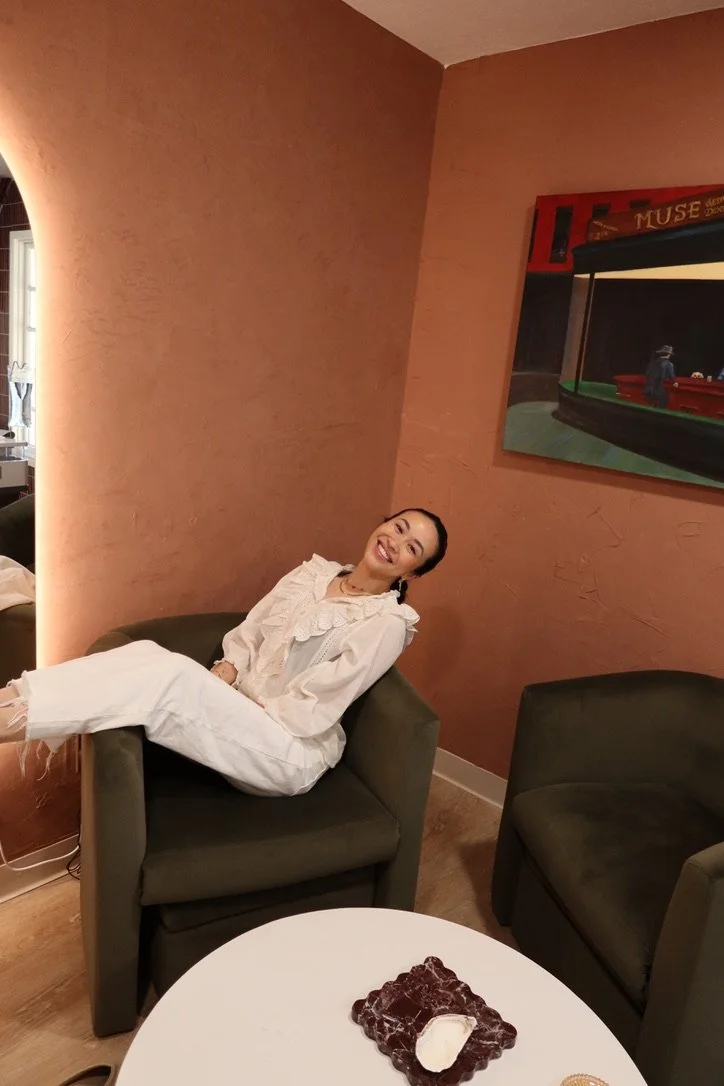
What Is Facial Balancing and How Is It Different from Regular Botox + Filler?
If you've been on Instagram lately, you've probably seen "facial balancing" everywhere!!
It's having such a moment. And honestly, like a lot of things that have a moment in aesthetics, the meaning has gotten a little blurry. Some practices use "facial balancing" to describe the same Botox and filler appointments they've always done. Others treat it as a completely different approach.
So which is it?
Both, kind of! The treatments themselves (Botox, filler, Sculptra) are the same products you've always heard of. What's different is the philosophy behind how they're used.
Let me break down what facial balancing actually means, how it changes the way I work with my patients at Muse, and how to tell if the practice you're considering is doing the real thing or just using the buzzword.
the short answer
Facial balancing is an artistic approach to injectables that treats your face as a complete picture instead of a list of separate problems.
Instead of asking "where do you have a wrinkle" or "where do you want filler," I'm asking "what does your face look like as a whole, and where can small adjustments create harmony across all of it?"
The result is usually treatment in places you didn't expect, with smaller amounts in each area, distributed across multiple features. The end result is a face that looks subtly more refreshed and more put-together. Not a different face! Just the most balanced version of yours 💗
how facial balancing differs from a "regular" Botox or filler appointment
Walk into a typical med spa and ask for Botox. The convo usually goes:
"Where would you like Botox today?"
"I have these forehead lines."
"Great, let's do 20 units in the forehead."
That's a transactional appointment. You came in with a problem, the injector treated the problem, you leave. There's nothing wrong with this for some patients. It's quick and predictable.
A facial balancing appointment looks SO different from the start.
"Tell me what's bothering you about your face right now."
"These forehead lines."
"Got it. Let me also take a few minutes to look at your whole face."
Then I'll spend 10-15 minutes really assessing things you may not have brought up. The symmetry of your brow position, how your chin relates to your nose in profile, whether your cheek volume supports the rest of your midface, your jawline shape, the width of your smile in relation to your face.
After that assessment, my recommendation will probably include the forehead lines you came in for. But it might also include:
A few units of neurotoxin in your masseter to slim your lower face and create proportion
Small amounts of filler in your chin to bring your profile into harmony
A touch of cheek filler to support the midface and lift the lower eye area
Adjustments to your lip-to-chin ratio
None of these are about "fixing" something specifically. They're about creating proportion across your whole face so the result is cohesive instead of spot-treated.
why this approach gives you the most natural results
The most common feedback I get after a facial balancing appointment isn't "wow, my forehead looks great." It's "people keep telling me I look refreshed but they can't pinpoint what I had done."
That's the WHOLE goal!! ✨
Facial balancing produces results that look natural specifically because no single feature is being dramatically changed. Big, isolated changes (overfilled cheeks, frozen forehead, dramatically shaped lips) stand out because they don't match the rest of the face. Small, distributed changes blend in because they're proportionate.
If you've ever seen someone whose face looks "off" but you can't quite say why, it's almost always because a single feature got over-treated relative to the rest of the face. Facial balancing is the antidote to that 💫
what facial balancing is NOT
A few things that get marketed as "facial balancing" but really aren't:
A specific product. There's no "facial balancing serum" you can order off a menu. It's an approach, not a SKU.
Always more expensive. Sometimes a balanced approach actually uses less product than a single-area appointment. Smaller distributed amounts can give you bigger overall results.
Only for "older" faces. I do facial balancing on patients in their 20s for prevention and proportion, all the way through patients in their 60s for restoration. It's truly for everyone.
Permanent. All injectable results are temporary. Botox lasts 3-4 months. Hyaluronic acid filler lasts 9-18 months. Sculptra can last up to 2 years. Your plan is built around your maintenance preferences.
why I do facial balancing with ultrasound guidance
This is one of the things that makes my approach different from most injectors in San Diego.
Ultrasound-guided injection means I can actually SEE where the blood vessels are before placing filler. For facial balancing specifically, this matters so much because:
Facial balancing often involves treating areas around the nose, midface, and temples where vascular complications are higher-risk
I can place filler way more precisely, which means smaller amounts give bigger results
It's significantly safer than blind injection, especially for patients getting non-surgical rhinoplasty, tear trough, or temple work
Most injectors don't offer ultrasound guidance because the equipment is expensive and the training is significant. But for the kind of careful, distributed work that facial balancing requires, it's the standard I want to hold myself to. Safety always comes first 💗
how to tell if a practice does REAL facial balancing
If you're shopping around, here are the questions worth asking at any consultation:
"Will you assess my whole face or just the area I'm asking about?" A real facial balancing practice will WANT to see your full face from multiple angles before recommending anything.
"Do you use ultrasound guidance for filler?" Not required, but a strong sign of clinical care.
"How many areas do you typically treat in one session?" Practices that only do one area at a time aren't really doing facial balancing.
"Can I see before-and-afters of patients with similar features to mine?" Look for results where the patient just looks refreshed, not transformed.
"What's your philosophy on volume?" The honest answer should involve restraint and the words "less is more." Run from anyone pushing maximum volume!!
what facial balancing looks like at Muse
At Muse Aesthetics & Dentistry, every single aesthetic appointment starts with a full facial assessment. Even if you came in just for lip filler, I'll spend a few minutes looking at how your lips relate to the rest of your face before we proceed.
For new patients I usually recommend starting with a complimentary consultation so we can talk through your goals, look at your full face together, and build a personalized plan. That plan might be a single appointment or be spread across several visits depending on your timeline and budget.
My approach is grounded in restraint. The goal is for you to leave looking like the most refreshed version of yourself, not someone different. People should compliment YOU, not the work 💗
what to do next
If you've been curious about facial balancing and want to talk through whether it's right for you, the easiest first step is to book a complimentary consultation. We'll go over your goals, do a full facial assessment, and build a plan that fits your timeline and budget. There's no pressure to commit to treatment that day, or ever 💫
You can book a consultation at themuseaesthetics.com.
Whatever you decide, I hope this was helpful! Facial balancing has become a buzzword, but the real version of it can be genuinely transformative when done thoughtfully.
xx, Sarah Garces, NP-C Muse Aesthetics & Dentistry, Del Mar
Disclaimer:Pricing referenced in this post is approximate and based on the Del Mar and San Diego market as of April 2026. Individual pricing will be determined during your consultation based on your specific treatment plan. All injectable treatments carry inherent risks that will be discussed at your consultation. This content is for informational purposes only and does not constitute medical advice. Please consult with a licensed aesthetic provider to discuss your specific situation and treatment options.
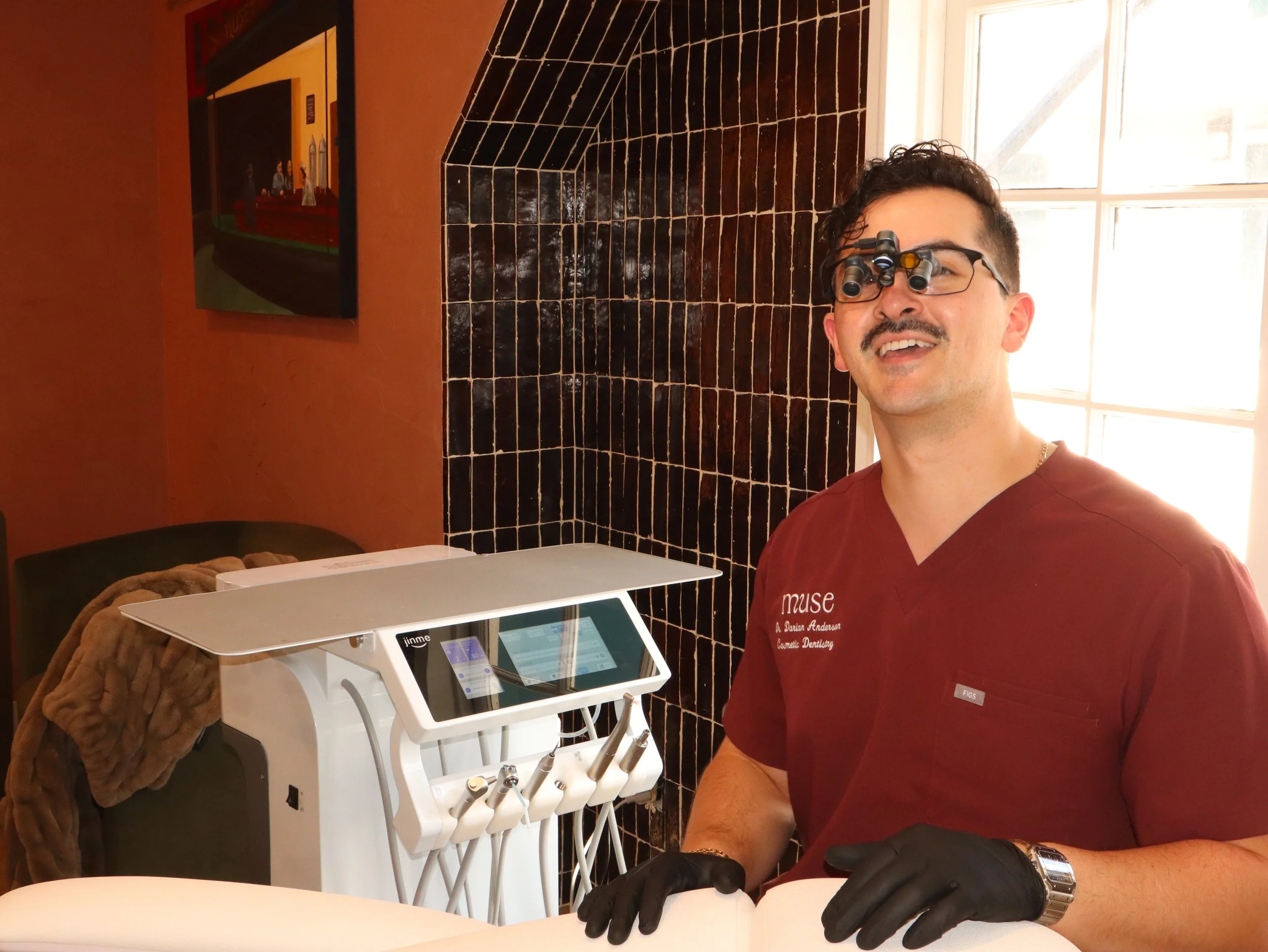
How Much Do Porcelain Veneers Cost in Del Mar?
Most dentists won't give you a real answer to this question.
I get why. Veneer pricing depends on the complexity of the case, the lab used, the technique, and the individual patient. A blanket number doesn't fit every situation. But the honest answer is that when patients ask "how much do porcelain veneers cost?," they're not looking for a pitch. They're looking for enough information to make a real decision.
So here's a straight answer based on the Del Mar and North County San Diego market, and specifically what it looks like at Muse.
The short answer
In Del Mar, porcelain veneers typically range from $1,200 to $3,500 per tooth, with most boutique cosmetic practices falling between $1,800 and $2,500 per tooth.
At Muse Aesthetics & Dentistry, porcelain veneers start at $2,000 per tooth at our standard rate. Through June 30, 2026, we're offering Founders Collection launch pricing at $1,500 per tooth for the patients helping us build our case portfolio.
A few examples of what that means for a full case:
4 veneers (the front teeth, often called a smile frame): $6,000 to $8,000
8 veneers (upper arch, most visible when smiling): $12,000 to $16,000
10 veneers (full upper arch, full smile transformation): $15,000 to $20,000
These are the real numbers. Now let me explain what actually goes into them.
What goes into veneer pricing
A veneer isn't just a thin piece of porcelain. The fee reflects everything that has to happen to produce a result that looks natural, feels like your own tooth, and lasts 10 to 15+ years.
Clinical time and artistry
A single veneer case at Muse involves a 60 to 90 minute consultation, a full intraoral scan and smile design, one to two hours of careful prep work, custom-crafted provisionals, a try-in appointment, and the final bonding. That's five to eight hours of direct clinical time from your dentist. Cosmetic dentistry is not a procedure you can rush. Every micron of prep affects the final fit, the shade, and the lifespan of the veneer.
Lab craftsmanship
Porcelain veneers are made by a ceramist, not pressed out of a machine. A skilled lab partner charges significantly more per unit than a commodity lab, but the difference shows up in the color, translucency, and surface texture of the final result. At Muse, we work with a lab that takes the time to hand-layer and adjust each veneer to match the shade and character of your natural teeth.
Materials
Medical-grade porcelain, biocompatible bonding agents, digital scanning, and quality temporaries all factor into the final cost. These are not the places to cut corners. Cheap bonding agents and rushed temps are the most common cause of veneer failures and do-overs.
Clinical expertise
Training in smile design, facial proportion, bite analysis, and conservative prep technique takes years to develop. When you pay more for a cosmetically-trained dentist, you're paying for the judgment of when NOT to prep, when to adjust the occlusion, and how to match the veneers to your facial features rather than a stock template.
Why pricing varies between practices
Let's break down what different price points usually signal.
$800 to $1,200 per tooth
Usually found at large chain practices, corporate dental groups, or offices that do high volume at lower margins. The lab work is often outsourced to overseas labs. Chair time is limited. Often a different dentist each visit. Fine for some cases, but rarely the right fit for a smile makeover where every detail shows.
$1,300 to $1,800 per tooth
Solo general dentists who offer cosmetic work as part of a broader practice. Decent quality, moderate attention to detail. You may be seen by assistants for parts of the case. Lab partners can vary.
$1,800 to $2,500 per tooth
Boutique cosmetic practices where cosmetic dentistry is the focus rather than a side offering. Dedicated case time, skilled lab partners, conservative prep philosophy. Most boutique Del Mar and La Jolla cosmetic dentists fall here. Muse sits in this tier.
$2,500 to $4,000+ per tooth
Ultra-premium destinations (Beverly Hills, NYC). The ceramists are often celebrity-tier, and you're paying for the name as much as the work. Worth it for some patients, unnecessary for most.
What you should actually ask about
When you're comparing practices, price alone is misleading. Here's what I'd ask at any consultation:
Who makes the veneers, and where? Domestic lab partners using hand-layered porcelain produce dramatically better results than mass-produced overseas veneers. Ask for the lab's name.
How much natural tooth structure will be removed? A conservative prep philosophy preserves your enamel and your long-term tooth health. Over-prepped teeth can't be undone.
Will I see the design before any work begins? At Muse, every case starts with a Virtual Smile Design so you preview your new smile before we prep a single tooth.
What is the dentist's cosmetic training? Not every dentist does veneers. Ask about specific continuing education in smile design, bonding technique, and aesthetic case planning.
What does the warranty look like? Reputable practices stand behind their work. Ask what happens if a veneer chips or fails within the first few years.
Pricing at Muse specifically
At Muse, porcelain veneers start at $2,000 per tooth at standard rate. Every case is priced individually after your consultation because real pricing depends on:
The number of veneers (4, 8, 10 or more if working on both arches)
The complexity of your case (color correction, bite correction, gum contouring, combination with whitening or clear aligners first)
Any restorative work that may be needed before veneers (addressing cavities, gum health, or bite issues first)
Through June 30, 2026, we're running Founders Collection pricing at $1,500 per tooth. This is a launch rate for the first patients at Muse, and it's not returning after June 30.
Financing and membership options
A full veneer case is a significant investment. We offer a few ways to make it work:
Cherry Financing — Fast approvals, terms up to 24 months, 0% APR for qualified applicants. Most patients finance some or all of their case through Cherry.
Muse Collective Membership — Members save 10% on all veneer cases (Founders Collection or standard), plus included professional whitening, member pricing on aesthetic services, and Vault credits toward future treatments. The membership pays for itself on a single 6-veneer case.
What I'd recommend as a next step
If you're considering veneers and want a real answer for your specific case, the best first step is our free Virtual Smile Consultation. You send a few photos of your smile, and I'll personally review them and share honest feedback on whether veneers are the right option for you, what we'd recommend, and what the investment would actually look like.
No pressure, no hard close. Just honest information to help you decide what makes sense.
You can start your Virtual Smile Consultation at themuseaesthetics.com/virtualsmileconsultation, or book an in-person consultation here.
Whatever you choose, I hope this was helpful. The more you know going in, the better your case will be — whether you end up at Muse or somewhere else.
— Dr. Darian Anderson, DDS Muse Aesthetics & Dentistry, Del Mar
Disclaimer: Pricing referenced in this post is accurate as of April 2026 and is subject to change. Founders Collection pricing valid through June 30, 2026 and cannot be combined with other offers except Muse Collective membership discounts. Individual pricing will be determined during your consultation based on your specific treatment plan. This content is for informational purposes only and does not constitute medical advice. Please consult with a licensed dental professional to discuss your specific situation and treatment options.
Welcome to the Muse Journal
Welcome to The Muse Journal.
This is the space where we'll share what we're learning, what we're seeing, and what we think matters in the worlds of cosmetic dentistry and facial aesthetics.
Expect honest takes on:
What natural-looking cosmetic work really looks like, and why so much of it doesn't land that way
The techniques and technology we use at Muse, and why we chose them
Patient stories that show the why behind the work
Behind-the-scenes looks at how smile design and facial balancing actually happen
Straightforward answers to the questions patients bring to our consultations
We built Muse to be a different kind of practice. Boutique, fee-for-service, unrushed, and built around results that look like the most elevated version of you. This Journal is an extension of that philosophy.
If there's something you've always wanted to know about veneers, Botox, facial balancing, smile makeovers, or anything in between, reach out. We'll probably write about it.
Thanks for being here.
— Dr. Darian Anderson & Sarah Garces,, NP-C
Muse Aesthetics & Dentistry, Del Mar