The Muse Journal
Thoughts on cosmetic dentistry, facial aesthetics, and the art of natural enhancement from Dr. Darian Anderson and Sarah Garces, NP-C.
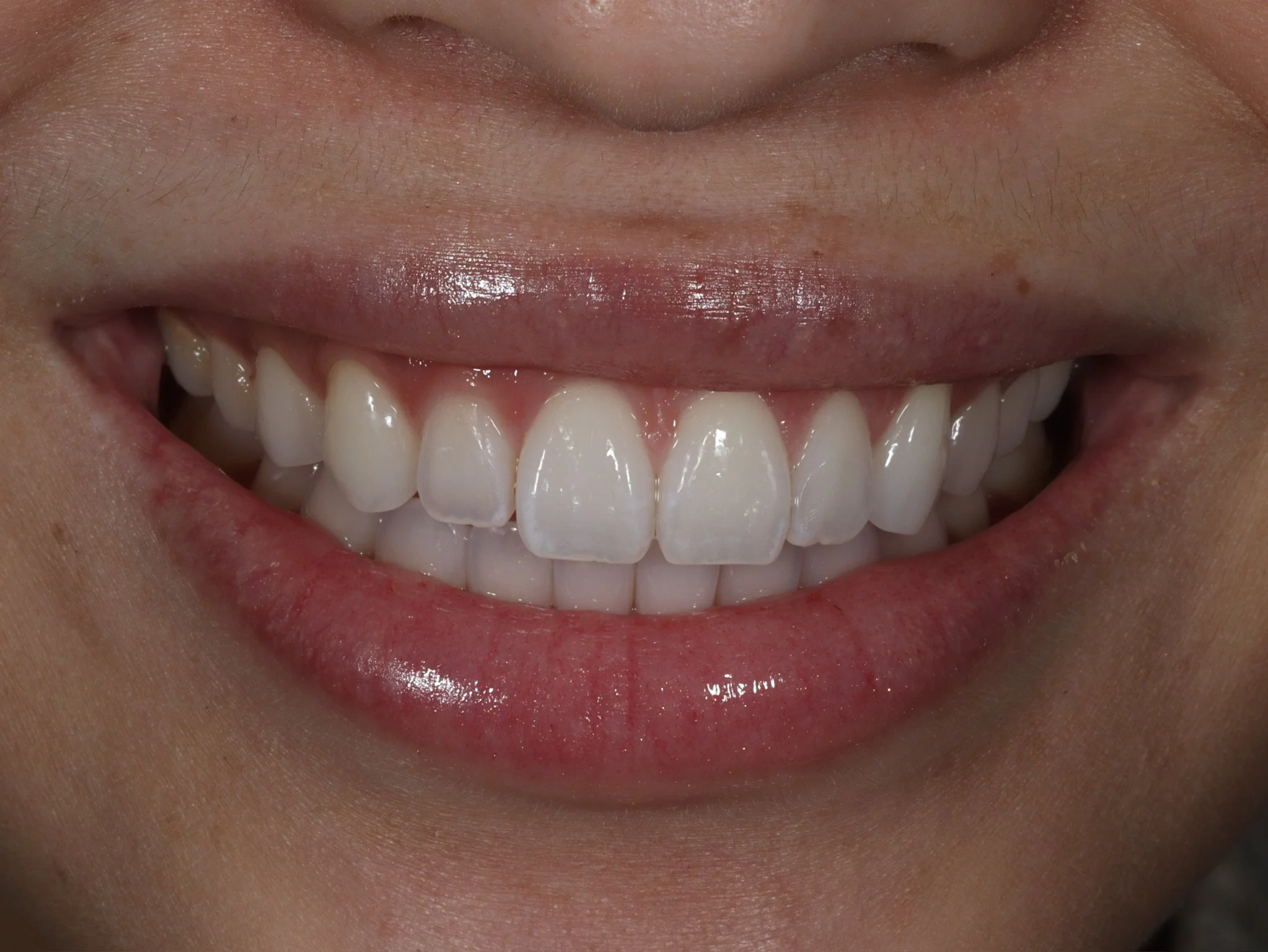
Will My Veneers Look Fake? An Honest Answer from a Cosmetic Dentist
This is the question I hear at almost every veneer consultation.
It's usually phrased a few different ways. "I want veneers, but I don't want them to look done." "I've seen people whose veneers look so fake, I don't want that." "Can you make them look natural? Like, REALLY natural?"
The honest answer is yes. Veneers can look completely natural and undetectable when they're designed and executed well. They can also look obvious and overdone when shortcuts are taken.
The difference isn't about the technology. It's about the philosophy of the dentist designing them.
Let me explain what actually makes veneers look natural versus fake, and what to look for when you're trying to choose a cosmetic dentist who will give you the result you actually want.
Why so many veneer cases look fake
If you've ever seen someone whose veneers look obvious, you can usually point to one of three issues:
1. They're too white.
This is the single most common cause of fake-looking veneers. Patients often request the brightest possible shade because they associate "white" with "beautiful." But teeth that are too white for your skin tone, eye color, and facial features stand out instead of blending in. A truly natural shade is bright but warm, with subtle variation in translucency that mimics natural enamel.
2. They're too uniform.
Real teeth aren't perfectly identical. Each tooth has slight variations in shape, length, and translucency. When veneers are made too symmetrical and too matched, they read as artificial because the human eye unconsciously notices the lack of natural variation.
3. They're too long or too prominent.
Veneers should be designed in proportion to your face, your lip line, your gum line, and the visible space when you smile. When veneers are made too long or too forward-facing for someone's facial proportions, they create that "horse teeth" or "Chiclet teeth" look that's instantly recognizable as cosmetic work.
In every case, the issue isn't the porcelain. It's the design choices.
What makes veneers look natural
Natural-looking veneers come from getting four things right.
1. Conservative tooth preparation
There's a subset of dentistry that aggressively reduces the natural tooth structure to make placing veneers easier. The problem is that over-prepped teeth produce thick, opaque veneers that look bulky and obvious.
At Muse, we follow a conservative prep philosophy. We remove the minimum amount of natural tooth structure necessary, often less than 0.5mm. This allows us to use thinner, more translucent veneers that mimic the optical properties of real enamel. Your teeth still look like teeth, not like veneers placed on top of teeth.
2. Facially integrated smile design
Before any prep happens, we use a process called facially integrated smile design to map your veneers to your unique facial proportions. This includes:
The width of your face
The shape of your lips when you smile
The position of your gum line
Your chin and jawline proportions
The amount of tooth visible when you speak vs. smile
Veneers designed to complement your face (rather than to a generic template) look like they belong to you. That's the goal.
3. Master ceramist craftsmanship
The lab matters as much as the dentist. A master ceramist hand-layers porcelain to create natural variation in shade, translucency, and surface texture across each veneer. Mass-produced veneers (often from overseas labs that some practices use to keep costs down) lack this artistry, which is why they tend to read as uniform and artificial.
We work with a domestic master ceramist who handcrafts every veneer for our cases. The cost is higher than commodity labs. The result is incomparable.
4. The right shade for YOUR face
This is where I push back on patients more than anywhere else. When someone asks for the brightest white possible, my job is to honestly explain why that shade likely won't look natural on their face.
The most natural-looking shade is usually 1-2 shades brighter than your current color, not 5 shades brighter. We use shade guides and digital previews to help you visualize what different shades will actually look like on your face before any porcelain is made.
What to ask before you commit to a veneer case
If you're consulting with multiple dentists, here are the questions that will tell you who's likely to deliver natural results:
"How much tooth structure will you remove?" Anything more than 0.5mm should make you ask follow-up questions. Aggressive prep produces less natural results.
"Who is your lab partner and where are the veneers made?" A reputable cosmetic dentist will know their lab by name and have a relationship with the ceramist. Vague answers are a red flag.
"Will I see a digital preview of my smile design before any work begins?" Modern cosmetic dentistry uses Virtual Smile Design or similar tools to preview the result. If a dentist doesn't offer this, they're working without a roadmap.
"What shade do you typically recommend, and why?" A dentist who insists on the brightest possible shade or who recommends a shade without considering your features is prioritizing what's easy over what's right.
"Can I see before-and-afters of patients with similar features to mine?" Look for results where the patient looks like themselves with a beautifully refined smile, not like a different person.
The "less is more" approach to natural veneers
The patients who end up most happy with their veneer results are usually the ones who started by saying "I want them to look like ME, just better."
That's exactly the right framing.
The best veneer cases I've ever done are the ones where someone close to the patient says "did you do something? Your smile looks great, but I can't tell what's different." That's the goal. Refined, but not obvious. Brighter, but not bleached. Symmetrical, but not identical.
Less is more. Natural is harder than dramatic, but it's worth it.
What natural veneers look like at Muse
Every veneer case at Muse follows this approach. We design conservatively, we work with a master ceramist, we shade based on your face, and we use Virtual Smile Design to preview your result before we start.
Patients often ask if we have a "house style." We don't, because the whole point is that your smile should look like YOU, not like a Muse template. What we do have is a philosophy: facially integrated, conservative, intentional, and built around natural beauty.
The easiest first step
If you've been thinking about veneers but worried about looking fake, the best first step is our free Virtual Smile Consultation. You send a few photos, and I personally review them and give you honest feedback on what would actually look natural on your face.
You can start at themuseaesthetics.com/virtualsmileconsultation, or book an in-person consultation here.
The fear of fake-looking veneers is one of the biggest reasons people hesitate to start treatment. It's a completely valid fear. But it doesn't have to be your reality. Done well, veneers can give you a smile that you'll forget you didn't always have.
— Dr. Darian Anderson, DDS
Muse Aesthetics & Dentistry, Del Mar
Disclaimer:Results shown are representative of what can be achieved through cosmetic dentistry services and individual results may vary based on personal factors, existing dental conditions, and compliance with post-treatment care instructions. This content is for informational purposes only and does not constitute medical advice. Please consult with a licensed dental professional to discuss your specific situation and treatment options. All cosmetic and restorative dental procedures carry certain risks and benefits that will be discussed during your consultation.
How Much Do Porcelain Veneers Cost in Del Mar?
Most dentists won't give you a real answer to this question.
I get why. Veneer pricing depends on the complexity of the case, the lab used, the technique, and the individual patient. A blanket number doesn't fit every situation. But the honest answer is that when patients ask "how much do porcelain veneers cost?," they're not looking for a pitch. They're looking for enough information to make a real decision.
So here's a straight answer based on the Del Mar and North County San Diego market, and specifically what it looks like at Muse.
The short answer
In Del Mar, porcelain veneers typically range from $1,200 to $3,500 per tooth, with most boutique cosmetic practices falling between $1,800 and $2,500 per tooth.
At Muse Aesthetics & Dentistry, porcelain veneers start at $2,000 per tooth at our standard rate. Through June 30, 2026, we're offering Founders Collection launch pricing at $1,500 per tooth for the patients helping us build our case portfolio.
A few examples of what that means for a full case:
4 veneers (the front teeth, often called a smile frame): $6,000 to $8,000
8 veneers (upper arch, most visible when smiling): $12,000 to $16,000
10 veneers (full upper arch, full smile transformation): $15,000 to $20,000
These are the real numbers. Now let me explain what actually goes into them.
What goes into veneer pricing
A veneer isn't just a thin piece of porcelain. The fee reflects everything that has to happen to produce a result that looks natural, feels like your own tooth, and lasts 10 to 15+ years.
Clinical time and artistry
A single veneer case at Muse involves a 60 to 90 minute consultation, a full intraoral scan and smile design, one to two hours of careful prep work, custom-crafted provisionals, a try-in appointment, and the final bonding. That's five to eight hours of direct clinical time from your dentist. Cosmetic dentistry is not a procedure you can rush. Every micron of prep affects the final fit, the shade, and the lifespan of the veneer.
Lab craftsmanship
Porcelain veneers are made by a ceramist, not pressed out of a machine. A skilled lab partner charges significantly more per unit than a commodity lab, but the difference shows up in the color, translucency, and surface texture of the final result. At Muse, we work with a lab that takes the time to hand-layer and adjust each veneer to match the shade and character of your natural teeth.
Materials
Medical-grade porcelain, biocompatible bonding agents, digital scanning, and quality temporaries all factor into the final cost. These are not the places to cut corners. Cheap bonding agents and rushed temps are the most common cause of veneer failures and do-overs.
Clinical expertise
Training in smile design, facial proportion, bite analysis, and conservative prep technique takes years to develop. When you pay more for a cosmetically-trained dentist, you're paying for the judgment of when NOT to prep, when to adjust the occlusion, and how to match the veneers to your facial features rather than a stock template.
Why pricing varies between practices
Let's break down what different price points usually signal.
$800 to $1,200 per tooth
Usually found at large chain practices, corporate dental groups, or offices that do high volume at lower margins. The lab work is often outsourced to overseas labs. Chair time is limited. Often a different dentist each visit. Fine for some cases, but rarely the right fit for a smile makeover where every detail shows.
$1,300 to $1,800 per tooth
Solo general dentists who offer cosmetic work as part of a broader practice. Decent quality, moderate attention to detail. You may be seen by assistants for parts of the case. Lab partners can vary.
$1,800 to $2,500 per tooth
Boutique cosmetic practices where cosmetic dentistry is the focus rather than a side offering. Dedicated case time, skilled lab partners, conservative prep philosophy. Most boutique Del Mar and La Jolla cosmetic dentists fall here. Muse sits in this tier.
$2,500 to $4,000+ per tooth
Ultra-premium destinations (Beverly Hills, NYC). The ceramists are often celebrity-tier, and you're paying for the name as much as the work. Worth it for some patients, unnecessary for most.
What you should actually ask about
When you're comparing practices, price alone is misleading. Here's what I'd ask at any consultation:
Who makes the veneers, and where? Domestic lab partners using hand-layered porcelain produce dramatically better results than mass-produced overseas veneers. Ask for the lab's name.
How much natural tooth structure will be removed? A conservative prep philosophy preserves your enamel and your long-term tooth health. Over-prepped teeth can't be undone.
Will I see the design before any work begins? At Muse, every case starts with a Virtual Smile Design so you preview your new smile before we prep a single tooth.
What is the dentist's cosmetic training? Not every dentist does veneers. Ask about specific continuing education in smile design, bonding technique, and aesthetic case planning.
What does the warranty look like? Reputable practices stand behind their work. Ask what happens if a veneer chips or fails within the first few years.
Pricing at Muse specifically
At Muse, porcelain veneers start at $2,000 per tooth at standard rate. Every case is priced individually after your consultation because real pricing depends on:
The number of veneers (4, 8, 10 or more if working on both arches)
The complexity of your case (color correction, bite correction, gum contouring, combination with whitening or clear aligners first)
Any restorative work that may be needed before veneers (addressing cavities, gum health, or bite issues first)
Through June 30, 2026, we're running Founders Collection pricing at $1,500 per tooth. This is a launch rate for the first patients at Muse, and it's not returning after June 30.
Financing and membership options
A full veneer case is a significant investment. We offer a few ways to make it work:
Cherry Financing — Fast approvals, terms up to 24 months, 0% APR for qualified applicants. Most patients finance some or all of their case through Cherry.
Muse Collective Membership — Members save 10% on all veneer cases (Founders Collection or standard), plus included professional whitening, member pricing on aesthetic services, and Vault credits toward future treatments. The membership pays for itself on a single 6-veneer case.
What I'd recommend as a next step
If you're considering veneers and want a real answer for your specific case, the best first step is our free Virtual Smile Consultation. You send a few photos of your smile, and I'll personally review them and share honest feedback on whether veneers are the right option for you, what we'd recommend, and what the investment would actually look like.
No pressure, no hard close. Just honest information to help you decide what makes sense.
You can start your Virtual Smile Consultation at themuseaesthetics.com/virtualsmileconsultation, or book an in-person consultation here.
Whatever you choose, I hope this was helpful. The more you know going in, the better your case will be — whether you end up at Muse or somewhere else.
— Dr. Darian Anderson, DDS Muse Aesthetics & Dentistry, Del Mar
Disclaimer: Pricing referenced in this post is accurate as of April 2026 and is subject to change. Founders Collection pricing valid through June 30, 2026 and cannot be combined with other offers except Muse Collective membership discounts. Individual pricing will be determined during your consultation based on your specific treatment plan. This content is for informational purposes only and does not constitute medical advice. Please consult with a licensed dental professional to discuss your specific situation and treatment options.